
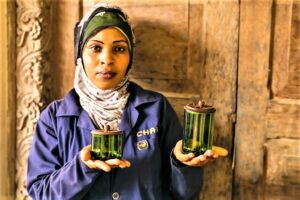
 CHAKO is a social enterprise operating in Zanzibar
The tourism industry creates a lot of opportunities for Zanzibar and its people. At the same time it also creates waste. Waste is difficult to process on the island. Things like brochures, bottles or glass can easily be given a new life. This is exactly what we do at CHAKO!
All CHAKO products are locally made in our workshop, combining waste and local materials. This way we stimulate the Zanzibar community while offering you a nice souvenir to take home!.
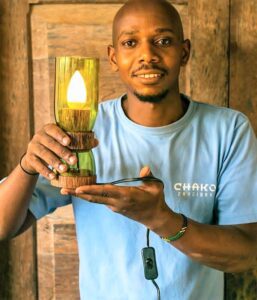 We started in 2010 in a small workplace in the boutique of Zenji Hotel where local women created products from recycled waste. As it grew, the need arose for a bigger place to accommodate more products, giving birth to CHAKO!
Chako works according to the “Tourist2Tourist” concept, meaning we make souvenirs for tourists from the waste that tourists directly produce. This offers tourists a way to reduce their negative impact on the island with a positive approach; by buying original, innovative souvenirs for friends and family.
‘CHAKO means ‘yours’ in Swahili, no better word to describe our products.’
Email: [email protected]
Phone: +255 (0)777 247 243
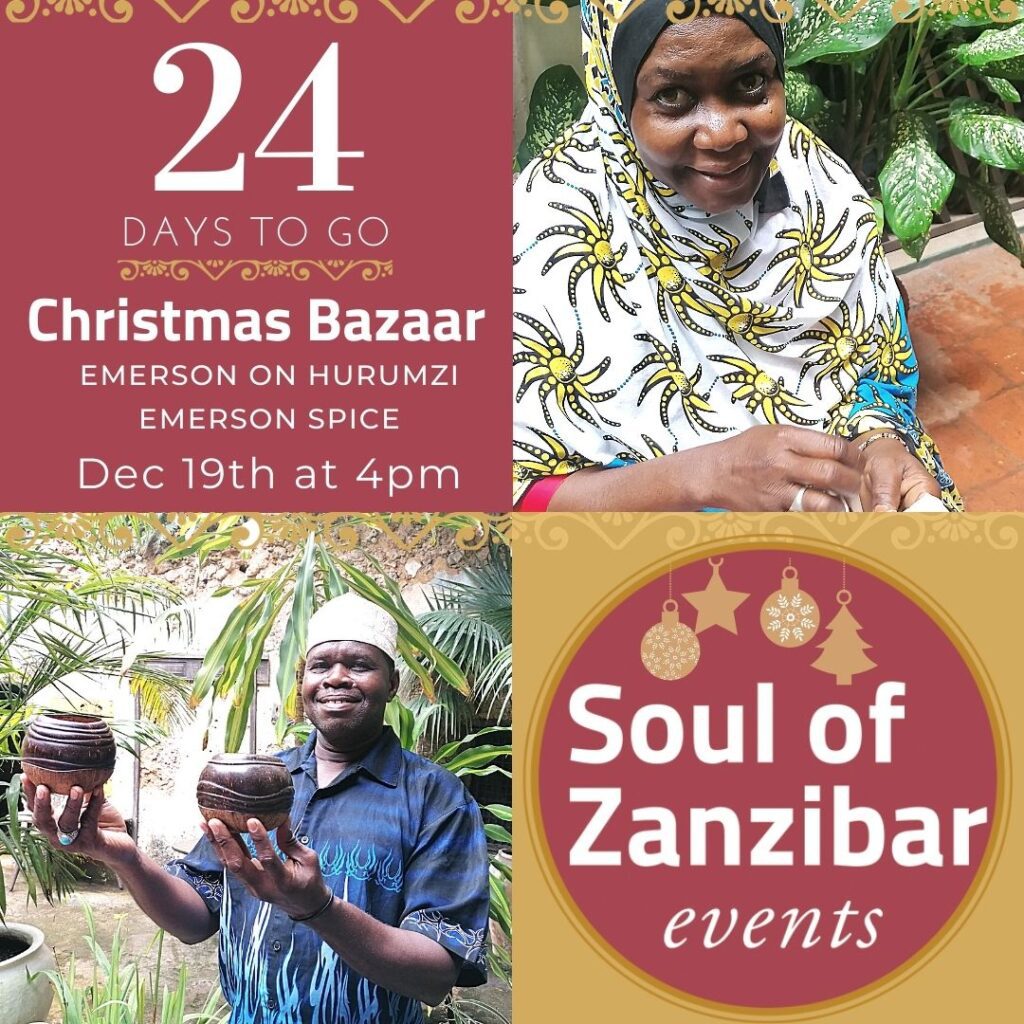
Chako may be found on the first floor of Emerson on Hurumzi during the Bazzar
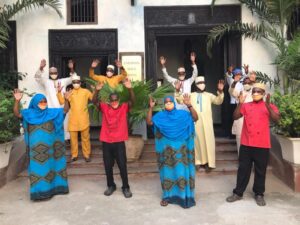 As in many places in the world, COVID-19 hit Zanzibar hard, both in terms of lives and livelihoods. Tourism, hence peoples’ incomes, collapsed. A team of tailors and supporting volunteers (professionals in specific disciplines) joined forces in Masks for Life Zanzibar and decided to help the community by producing face masks and providing them for free to vulnerable people. A team of 5 tailors was engaged to make the facemasks using locally sourced materials. The re-usable facemasks were distributed to various community groups, such as health care providers and community workers, the elderly living in different elderly homes, people living with HIV/Aids, people recovering from addictions and other community groups.
The face mask was created in the workshop of Emerson Zanzibar by a talented team of tailors from charity Masks for Life Zanzibar. For each face mask sold, 70% goes to the local tailors /small businesses and three Zanzibari receive a free face mask.
The high quality face mask is made of two cotton layers, including the ‘Khanga’ fabric which story is deeply rooted in the history of our archipelago. The facemasks have been made using international guidelines. The facemasks are washed and ready to wear. It is advised to wear these, especially once it is not possible to keep physical distance from other people. Please always hold the facemask by the elastic and avoid touching the cotton fabric. This facemask is re-usable. Please wash with soap and hot water (60 + degrees). Please dry in direct sunlight or use an iron after drying.
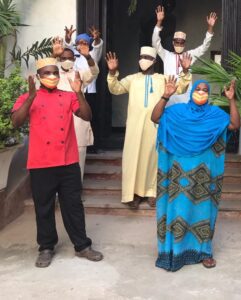 Facemasks are for sale in Farouque atelier in Emerson on Hurumzi. For orders, please contact Masks for Life Zanzibar by e-mail.
E-mail: [email protected]
Facebook: @MasksForLifeZanzibar
Instagram: #masks_for_life_zanzibar
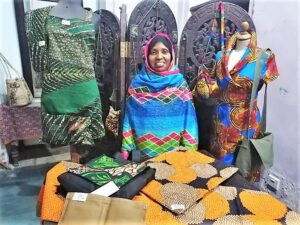 There is an old Swahili poem which goes: Mimi kama khanga; nafa na uzuri wangu (I am like a Guinea Fowl (khanga-cloth); I die in all my beauty).
Our products are made from local fabrics called kanga and kitenge. The kanga is a printed piece of cotton cloth that is worn by African coastal women. The word Kanga stems from the Swahili word for Guinea Fowl because the pattern resembled of the dotted bird. Kabisa is simply completely in Swahili; so Kanga Kabisa means Completely Kanga.
Kitenge fabric is a colorful patterned wax print in a heavier material than the Kanga.
The Kanga embodies art, beauty and culture. It is used at any occasion and follows people through life.
Our business idea is straight on – to produce unique clothing and accessories of the highest quality in Zanzibar. The production is fair and our aim is to make as little environmental impact as possible eg to source our raw material in the region.
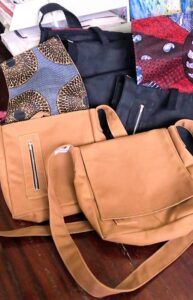 The company was founded in 2004 and is now owned by Sabrina Othman Faraji. She manages the production with her team.
The mix of knowledge, experience and personalities – everyone with their own driving force – makes Kanga Kabisa; and that in combination helps us to reach our goals!
Contacts:
Tel/WhatsApp: +255 672 039 382
E-mail: [email protected]
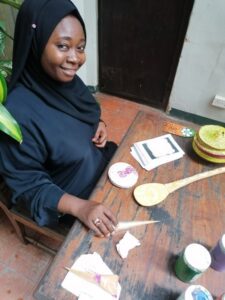 Najma was born in Makunduchi and went to school in Kitogani. She went to secondary school in town at Ben Bella Secondary School. Already at home, after school, she was applying henna, braided hair, made kofia and do other hand crafts. Makunduchi has a tradition of kofia making and she learnt this from her mother. When finishing school, she continued to do these handcrafts as her work, she does this from home.
In 2006 her colleague Fatma came up with the idea of applying henna on canvas. She and another artist Ausiy developed the idea further to move the henna from the body to the canvas. Fatma started with a group of 10 women the Hurumzi Henna Art Gallery. They started with doing workshops together to do these henna artworks on canvas. Artists Ausiy and Kiwenge led these workshops and they were taught how to use paint, to make frames, to put the canvas on a frame, how to do background painting, and then how to paint the actual henna designs.
In this style of painting, she uses the brush for the background and the cones, like with normal henna painting for the details. During the workshops they learnt how to mix colours and develop the designs more on the canvas. She will also show how the henna can be applied to different items as decorations.
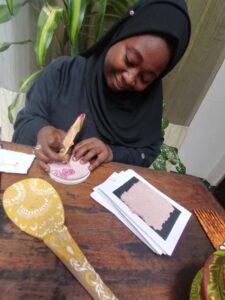 To start up, the group received support with a location where they could do their work and sell their artworks. After a while they were able to run their own organisation without support of others. While selling their artworks, they were able to pay the rent for their workshop. Currently the group who run the Hurumzi Henna Art Gallery consists of 7 ladies: Fatma, Jamila, Saada, Mtumwa, Asia, Rehema, Najma. All women from the group have developed their own distinct style with the henna arts. Their workshop has moved to another location in Hurumzi where you can see the different artworks and see the ladies at work. During the Christmas Bazaar you will find Najma and her colleagues in the Ballroom at Emerson on Hurumzi.
Contact/WhatsApp: +255 777 777 274
E-mail: [email protected]
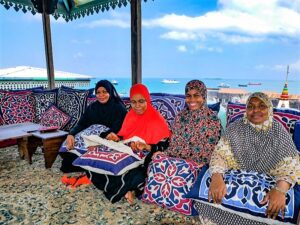 Sasik is the most successful women’s craft co-operative in Zanzibar, creating elaborate furnishing covers and wall hangings based on Arabic designs. They decorate homes and hotels in Africa and around the world. More importantly the work for the women of Sasik helps them to provide a better life for their families.
Many customers ask- What does Sasik mean? It is not Swahili or Arabic but an acronym based on the founders name Saada Abdullah Suleiman Industry Karibuni. In Swahili KARIBUNI means “You are all welcome” So Please feel free to look around in their shop and workshop in Gizenga Street in Stone Town.
Sasik began in 1994 when Saada Abdullah Suleiman taught herself to do appliqué work and encouraged her friends and family to join her. A grant from the Tanzania Gatsby Trust, (Based in the UK) helped to set-up the workshop where 12 women learned Saada’s technique and began creating the Sasik look. Currently the co-operative has over 30 women working together.
The beautiful and intricate designs of Sasik work are based on many influences these include traditional Arabic, Swahili and Bedouin patterns also architectural details of Stone Town. Each piece has the exquisite, colourful patterns hand stitched to material.
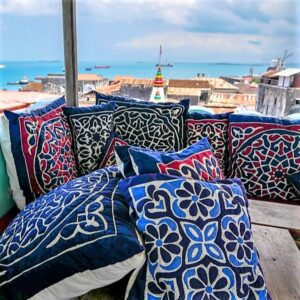 Do you have your own favourite design? Sasik can copy design you provide on cushion covers etc. You are welcome to visit them with special orders and requests.
Contact/WhatsApp: +255 715 132 100
E-mail: [email protected]
Facebook: @sasikzanzibar
Instagram: #sasikzanzibar
During the Christmas Bazaar, Sasik will be selling and working on new designs on the 1st floor at Emerson on Hurumzi.
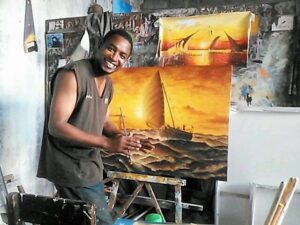 Idarous was born and raised in Stone Town. He went to Forodhani school. He lives in Gizenga street, in the middle of Stone Town. He has a workshop at Soko Muhogo where he does his work.
While he was in school, he liked to draw with pencil. It was his hobby and he continued also later on to make the signboards for shops and small businesses. He taught himself to do this and developed his own style and techniques while looking at different examples.
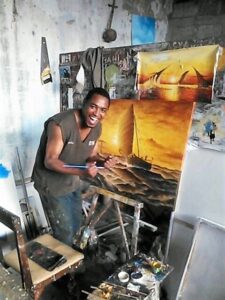
He went to Haile Selassi school and after that worked at the workshop at Viwanda kidogo kidogo to sew shirts on the sewing machine. He got work in local restaurants and in 1995 he started to work with the grocery company Mohammed Enterprises. The company closed in 2001 and from that time, he did his drawing as a profession.
Besides the tile painting, he also paints on canvas. When making the tile paintings he first sketches with a marker pen, on a paper and puts this behind the glass, then he uses this as a sketch to paint the tile with oil paint. It takes about a day to dry properly.
He usually makes the tiles on order, you can contact him by phone on WhatsApp on the below number. During the Christmas Bazaar, he can be found at Emerson Spice Secret Garden making his new designs on the tiles.
Contact/WhatsApp: +255 777 860 675
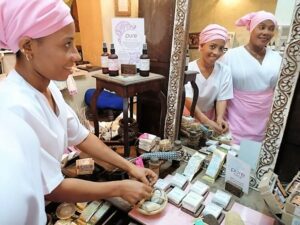 Mrembo is the Swahili word for a beautiful, sophisticated woman who likes to pamper herself. At the Mrembo Traditional Spa in the heart of Stone Town, they do exactly that: pamper you in true Zanzibar style.
Choose your favourite from our enticing range of massages, scrubs, facials, mani/pedi and henna adornments.
The treatments combine time-honoured recipes from the Zanzibar Archipelago with solid professional practice.
All ingredients are fresh, locally sourced and 100 % natural. The shop features locally made handicrafts, fashion items, music from Zanzibar and our own beauty products, made right here at the spa. Their complimentary spice tea is famous all over town.
Let yourself be enveloped by lovely scents, sounds and textures, meet interesting people and learn something new…
 At Mrembo Spa, they celebrate and share Zanzibar’s time-honoured knowledge of natural beauty, the Spa invites people to relax, enjoy and meet in an inspiring atmosphere, and we provide livelihoods for 10+ Zanzibari families.
In the shop discover the many niches and corners: lovely handicrafts, household pieces evocative of Zanzibar’s culture, like hand-woven mats and fabrics, brass flacons for rosewater or clay pots to burn incense (udi), music by Zanzibari performers and much more; strictly no imported or mass-produced items.
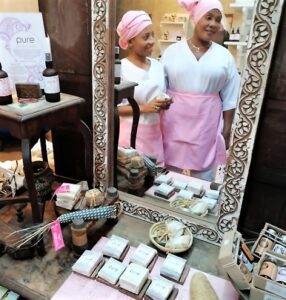
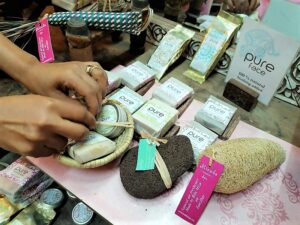
Most of the products are hand-made by challenged people, thus providing them with a sustainable income in a very competitive market. In the shop and also during the Christmas Bazaar you can also purchase your favourite items of Mrembo’s own line of natural cosmetic products, “Pure” – produced with love, by us, for you.
Contact/ WhatsApp: +255 777 430 117
Tel: +255 24 2230 004
www.mrembospa.com
Facebook: @mrembo.spa
Instagram: # mrembospa
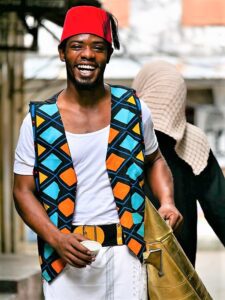 Yussuf Suleiman Ali is known by everyone in town as Hashim. He sells Zanzibar style coffee and Tangawizi and sweets like kashata, halua, visheti, dates and vileja.
His mother is from Iringa and comes from a family where they farmed coffee, but also a variety of different other crops. His father is from Pemba and is famous as coffee seller in Zanzibar. His parents got married in Zanzibar and his father initially had a grocery store in Mlandege. His father closed his business selling groceries after travelling to Pemba for a longer period of time and upon his return his mother advised to start a business of selling coffee instead.
He started this coffee business in 2000. Hashim was born in 1996 completed form 2 at Darajani School. He grew up learning all about coffee from his father. It is really started as a family business.
His father still sells coffee in Mtendeni and Hashim works currently at the same place. In the past he has had a stand selling coffee at different places.
Sometimes they get orders from weddings, ceremonies, funerals, festivals and also Zanzibar culture show. Hashim has participated in 31 festivals in his work with coffee so far. For example he have participated in the Sauti za Busara festival, at the Stone Town Food Festival, at the Reggae Festival, and the Zanzibar International Film Festival.
Last year, he received a certificate from the Tanzania Coffee Board as one of the people who promotes the sale of coffee in Zanzibar and he got the chance to be the chairperson for the coffee business in Zanzibar.
On World Tourism Day, he participated in the official celebrations in Zanzibar. Recently he went to the mainland to represent Zanzibar in the Coffee Festival in Moshi.
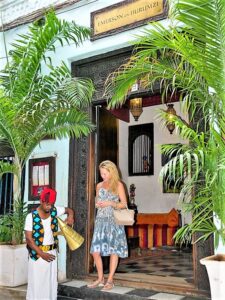 During this festival there was a chance to sell and promote the coffee, and there were opportunities for training in different workshops. He met a lot of different coffee sellers and continues his business with a lot of energy here in Zanzibar.
At the Coffee Festival in Moshi he presented his vision: ‘My vision is to be a professional, official coffee expert. I attended different festivals and met with professional coffee makers from around the world; from farmers, to packaging, to shipment, to customers.
Recently I saw a video clip by a man and woman who were showing how to make different types of coffee. When I saw this, I felt like there is still so much more to learn about coffee and I look forward to learn all about this.’
Hashim sells coffee beans and ground coffee as well. Also he is open to participate in different festivals and events. He can be contacted for any orders. Try his coffee in the Christmas Bazaar!
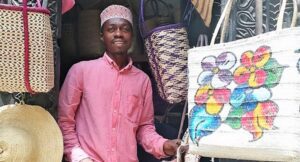 Mzee Ali and his son Sudi have a shop right next to Emerson Spice, across from the mosque. It’s very well known, as it’s been there from before the revolution, and way before tourism started to develop in Zanzibar, and long before neighbour Emerson Spice started operating.
Mzee Ali works together with his 30-year-old son Sudi in the shop and they sell traditionally woven bags, mats, kawa, fans, as well as some typical locally produced fruits, vegetables and pastries. They can always be found on the baraza outside.
The woven products are made at home by the women in their family. They live on the outskirts of Zanzibar Town, in an area called Shauri Moyo. When there are many tourists on the island and a lot of business in town, the production at home is not big enough and they also buy items from other producers from the countryside in Zanzibar. Because they also make the products at home, they are able to make a good selection of the other producers to make sure they keep selling good quality items.
Mzee Ali has seen Stone Town change throughout the long period that he has his shop in this location. Initially he sold only in the local market and only later, from the 90s the tourists were coming in.
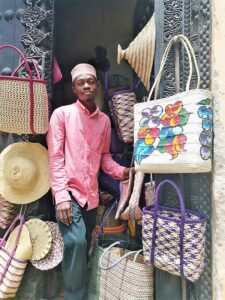 They buy the ukili from the countryside and also from mainland. These are traditional products and they are known to be strong and last long. For larger orders or special designs, it is possible to order items from the shop, or you can see the items and buy in the shop.
There are different types of bags, which Sudi will show in the Christmas bazaar; some are specially for the men when they go to the market, some are specially for going to certain occasions, some are more used by women. When you are interested in the details, please come and have a look at the Christmas Bazaar.
Contact: +255 773 356 903
Mzee Ali can usually be found right next to Emerson Spice hotel and Sudi will be during the Christmas Bazaar at Emerson on Hurumzi showing his items in the Ballroom.
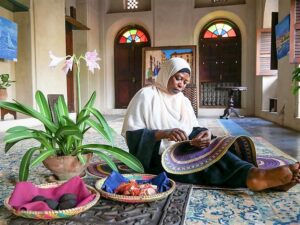 In 1991, Mayasa Abdalla Mussa started to work in tourism, when she started her job as chef in Matemwe. She was born and raised in Matemwe. She worked there for 17 years, first as chef, then as store keeper and then as pastry chef. When she had an accident while coming to work in public transport and quit the work in the hotel. She became a supplier of vegetables and fruits to different hotels in Matemwe. When there were more and more competitors, she decided to look for another product and got an idea to make soaps and supply them to different hotels in Matemwe.
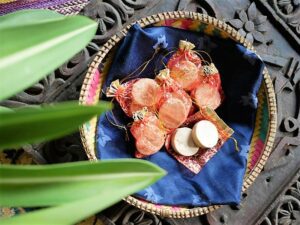 Since opening in 2010, Emerson Spice has been using her soaps for guests in the rooms. Emerson on Hurumzi has been using her guest soaps as well since 2013. Mayasa’s spiced soaps are made with a blend of coconut oil, essential oil of lemongrass and pieces of lemongrass.
Mayasa has 5 children, the first born is now 25 years old and the youngest is 20 years old. With her income as an entrepreneur, she was able to provide them all with a study. Katharina went to university to study Community Based Development and is now working as a teacher in Fuoni school. Her son Nassib studied in the apprenticeship programme for hospitality and is now working as chef at Emerson Spice. The other three daughters are housewives. Mayasa now has 6 grandchildren.
She continues to develop herself and recently took a course in community health services. This is an ongoing training on different public health topics that is organised through the Ministry of Health.
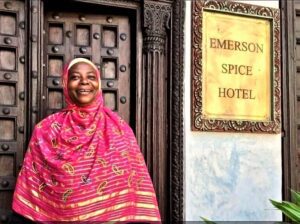 She now is providing her services to the community and the Government pays for these duties. For example, she visits pregnant women at home, to support with the cleaning of the household, and provide them with advice on the diet and healthy ways of living throughout the pregnancy. She will guide them to go to the clinic when this is needed.
Mayasa is a real entrepreneur looking at opportunities for her own development and to provide her family with the best chances possible through education.
Contact/ WhatsApp: +255 773 664 706
She can be seen at work with her soaps and handmade coasters in the Ballroom in Emerson on Hurumzi. For orders, she can be contacted by phone.
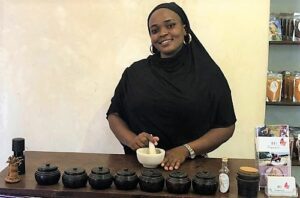 1001 Organic is a social enterprise and stands for organic premium spices and the sustainable cultivation of traditional varieties.
The company maintains transparency and traceability in its supply chain from the natural spice forests in Zanzibar to our customers.
1001 Organic insists on producing spices in a sustainable manner, which preserves nature and environment and benefits the local farmer cooperatives financially in order to maximize the positive social impact.
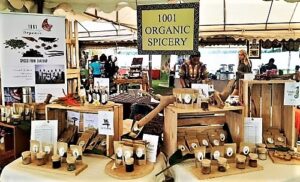 Savour the taste of Zanzibar and become part of their journey.
1001 Organic +255 242 233 297
web: www.1001organic.com
FB: https://www.facebook.com/1001organic/
IG: https://www.instagram.com/1001organic/
Twiga Brewery Tel +255 778 454 674
Email: [email protected] web: https://twigabrew.co.tz/
Instagram: https://www.instagram.com/twigabrew/
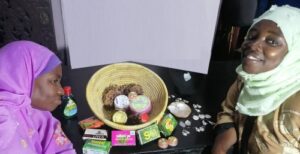 In 2006 the group Ukweli ni Njia Safi was started in Bweleo. While they were doing their seaweed farming, the ladies from this group met a group of Americans who talked with them about the idea to do something with the shells that were found on the beaches. They got in touch with dr Narriman Jiddawi of the Institute of Marine Sciences and started a project together.
First the ladies did the training of how to farm the oysters. At the beach by Bweleo there is a large space where the ladies were used to grow seaweed. There they selected one area where oyster farming is possible. First the seaweed was sold there to a company.
Then after that training, they got a training on how to work with the shells and the pearls.
First to clean the shells, then to cut them in the good way and then to use them to make jewellery.
The group consists of 10 ladies and 2 men. The men are mostly responsible for farming of the oysters and the ladies are developing the oysters and the shells into jewellery.
It takes a year to get the pearls to grow. Then it is taken out of the water, the shell is broken, the meat is eaten and the shell and pearl is used for the jewellery. They use a saw and a grinder to cut the jewellery and sandpaper for finishing the product. After this, it is polished with a special cloth.
The outside of the shells is made into a powder that is included in the food for chicken. In short, nothing is wasted of this product.
The jewellery is sold in hotels, but there is currently not a lot of tourists. They are still looking for more partners, shops and hotels where they can sell their products.
The group is active by also attending different markets and exhibitions where they display and sell their products.
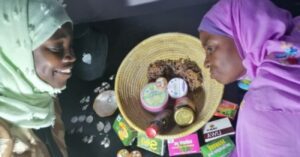 Traditionally, they used to grow seaweed and sell this to a company that used it in their production of different cosmetics. At that time, they earned very little from this. Through the University of Dar es Salaam – Institute of Marine Sciences in Zanzibar, they did a training to develop other products from the sea weed. Seaweed has different ingredients that benefit the skin and the whole body. Now they are adding value to the seaweed by making soaps, jam, vicks, lotion, shampoo, etc.
In the Christmas Bazaar they are selling their seaweed products, as well as the jewellery made of pearls and shells.
You are welcome to visit them on the second floor at Emerson on Hurumzi.
Contact/WhatsApp: +255 773 522 775 and +255 776 531 574
E-mail: [email protected]
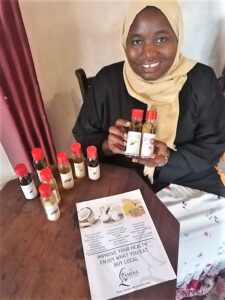 Amina Juma Kalumanzila started her business Amina Products in November 2018.
She grew up in Forodhani orphanage in 2004 and then stayed from 2010 in Mazizini.
She went to Kajificheni primary school and Hurumzi secondary school. Since 2012 she stayed with her grandmother and then went to Dar es Salaam for a while and then came back to Kiembe Samaki, where she sold soup to make a living and then got a chance to work first for a short period at the airport and then as waitress in a hotel in Jambiani. She worked there for three years.
In that period she gave birth to her son Amir. She moved to Mombasa in Zanzibar town and with support of Daraja Foundation, she opened up her own beauty salon. After a while she noticed that she could not combine the work in Jambiani with it and gave up the business.
In 2018 she moved officially to the Flo house, which is run by Daraja Foundation. Flo stands for: Foundation Livelihood Opportunity.
She is a ‘big sister’ in the Flo house, which means she is mentoring the newer youth in the house.
In that time, she prepared to open her new business called Amina Products. She makes for example different oils and natural suncream, using zinc oxide, raspberry seed oil, lemon grass or lavender essential oil and coconut oil. She also produces items to use for cooking, such as garlic & ginger paste and turmeric paste.
Currently she is focusing on improving her products and it’s packaging. There are still a lot of new ideas and developments, which she would like to get involved with.
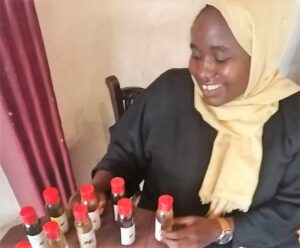 Amina is an active young entrepreneur and welcomes you to see a selection of her products at the Christmas Bazaar in Emerson on Hurumzi.
For more information about Daraja Foundation, please have a look on their website: https://www.darajafoundation.com/flohouse.html
Contact/ WhatsApp: +255 777 055 005
E-mail: [email protected]
Location in the Christmas Bazaar: tbc
 Malik comes from a family of sandalmakers well-known in his neighbourhood. He is 40 years old and operates from his workshop in Hurumzi, in Stone Town.
He was born and raised in Hurumzi itself and attended Forodhani School. When he left school, he started to work in the family workshop; he had been taught by his father the craft of making sandals and how to repair other leather items like shoes and bags.
The shop and workshop are located in his family house in Hurumzi. The sandals are displayed there and Malik can be found working there every day.
He designs the sandals himself and tries to develop different designs, varying from traditional sandals to different modern styles.
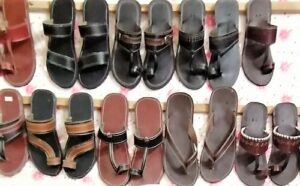
His inspiration comes from his own creative ideas – and once he gets an idea, he tries it out to see whether it looks nice. The designs are all original.
His father taught all the children in the family, but now only his elder brother and himself continue to design and make sandals.
@Abdul Malik
Tel/Whatsapp: +255 778 405 145
Location in the Christmas Bazaar: Malik can be found in the Secret Garden at Emerson Spice
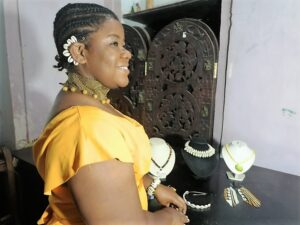 Dhahira Makame Ali was born and raised in Zanzibar. She is 26 years old and is a jewelry designer and producer.
After finishing form 4 in school, she did a Diploma in ICT and Accounting at the Zanzibar Institute of Financial Administration in Chwaka. After this she joined JKT (Jeshi la Kujenga Taifa) in Dar es Salaam. She was there for a year and a half, during which she trained in entrepreneurship.
Upon completion of her education, she taught herself to design and make jewelry through social media. She watched different videos on YouTube from people all over the world and from there drew her inspiration to pursue jewelry making. She calls her style “African”, using beads and shells to make necklaces, bracelets and earrings.
She sells her products online through social media as well as at different exhibitions in Zanzibar and Dar es Salaam which have given her a chance to promote and sell her jewelry.
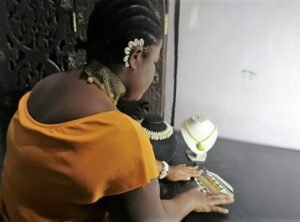 To grow her market worldwide, she also uses Instagram where she can display what she makes and export to customers outside of Tanzania.
Instagram: #dhamally_
Tel/Whatsapp: +255 673 665 581
e-mail: [email protected]
During the Christmas Bazaar Dhamally can be found on the 2nd floor at Emerson on Hurumzi
 “Zanzibari people love art, and carving is also an art”
“I would like to see more young people doing this kind of work”
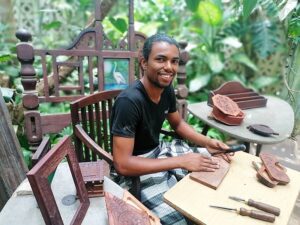
Mahad started woodcarving about 5 to 6 years ago. After finishing his O-Levels, he was looking for work and helping around with small jobs. He spoke with his uncle, a woodcarver of some 40 years, and he offered to teach Mahad for free. Mahad bought the tools and started to learn, seeing it as not only a Zanzibar tradition but also an opportunity to learn a skill and do a job that could be done at any time in life. In under 6 months to a year he was already able to carve a variety of designs.
His favourite thing is to carve difficult designs, it’s more challenging he says. Whether it’s a door, a box, or any other item – it’s the customer who decides what they would like and which design they would prefer. Carving is a passion, where he can apply his creativity.
Mahad can be found working in a workshop in Kiponda, close to the Hifadhi building and behind the Dhow Countries Music Academy. Customers who come to the workshop range from individual tourists to locals and even hotels. Several celebrities have also purchased his woodcarvings.
There are about 7 people working in the workshop and sometimes they get students wanting to learn the skill. Visitors, too, are welcome to get training in woodcarving. For a small fee, they can learn the basics.
Three years ago Mahad met Farouque Abdela from Emerson Zanzibar and he suggested Mahad to do modelling. Since then he has had several modelling jobs, including being involved in the fashion show with Wella hair and in a recent music video of Zuchu. He enjoys modelling, he says, besides his work as woodcarver.
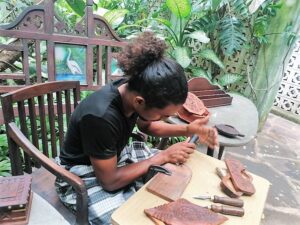
For Mahad it is important that he has the right mood when he is carving. This helps him to produce the best designs; he is not a carpenter, but an artist. He creates designs and then does the carving. “Zanzibari people love art, and carving is also an art,” he says. “I would like to see more young people doing this kind of work. It is possible to make money, to meet people on the job, while keeping the traditions alive.”
Tel/ WhatsApp: +255 623 962 317
E-mail: [email protected]
@bebecassanova
@cassanova789
Mahad can be found during the Christmas Bazaar in the Secret Garden at Emerson Spice.
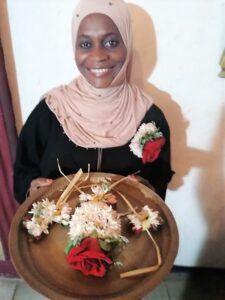 Amina Bakari Rajab grew up in a family with a long tradition of making flower decorations. Regularly we provide our guests with the vikuba – the jasmine bracelets when guests visit our restaurant. She is making these decorations at her home in Kikwajuni.
Amina’s grandmother, Biti Humoud, was married to an Indian man and during one of her visits to India, she got inspired to start making the flower bracelets and other flower decorations. Biti Humoud became well-known throughout Zanzibar for the beautiful flower decorations that she made. She taught her daughters to make these as well and then Amina was also taught this again from her mother. Now when a large order comes in, she also works together with the other women and children in the household to make them.
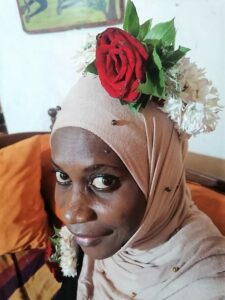 She has a garden with jasmine trees and gets flowers, such as patchouli and roses also from other places. She also uses natural materials to tie the bracelets together. Besides the vikuba – jasmine bracelets – she makes hair decorations, necklaces etc.
Amina can prepare these flower decorations on order for you. Visit her during the Christmas bazaar or place your orders via telephone or WhatsApp. She can send you photos of the different decorations that she can make.
Contact/WhatsApp: +255 713 41 89 93
Amina can be found in the Christmas Bazaar at a location tbc.
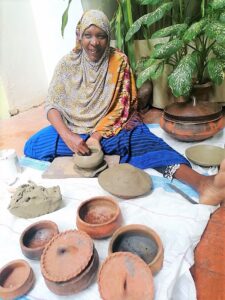 Mwanabaraka has been making clay pots and covers for about 20 years now. She is now 49 years old and has 5 children and 3 grandchildren.
When she saw her neighbour making the clay pots and covers, she was very interested in this. Her husband advised her to talk to her and ask her to show her how to do this. The neighbour explained and showed her how to do this and she gained more and more experience.
She sells the chungu (pots) and mikungu (cover) to different shops and makes them upon orders at home. This has given her a chance to work from home while she was raising her kids. Nowadays, all five of her children know how to make the clay pots as well.
First of all, she uses clay and sand and pounds this until it is soft. Then she puts this into a shape. She leaves it for two days in the open air. After that, she cleans it from the inside and makes the shape of the cover. Then again two days it sits and then she uses a small stone, a shangarawe, to make the design smooth. After that it needs to dry for a week, depending on the weather.
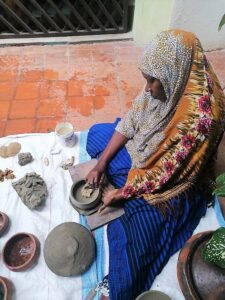 With sun it dries earlier in about 3 days, but with rainy weather it takes longer. She puts the clay pots on top of the makumbi (the outside of the coconut shell) and then puts this on fire to dry the pot. Once the fire is out, the pots are ready for use.
The pots are still used a lot for cooking and it is believed to be healthier to use these pots for cooking, as opposed to the modern cooking pots.
Besides the clay pots and their covers, she also makes the chetezo to burn udi and water bottles made from clay. She can be seen at work at Emerson on Hurumzi during the Christmas Bazaar.
Contact: +255773050751
Mwanabaraka can be found in the Christmas Bazaar – location tbc.
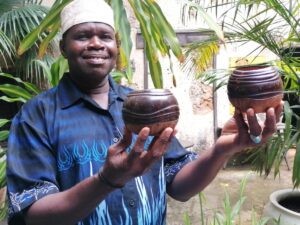 Mohammed was born in the south of the island and started work as a waiter at Matemwe Bungalows in 1990, having done hotel and waiters’ training in Arusha.
In this period, he met a Kenyan called Kennedy, who lived at Emerson House and who used to make coconut bowls. Mohammed was interested in this, and was subsequently introduced to Muragwe, another Kenyan who was an expert in bowl-making. He trained Mohammed how to make them and do the proper finishing work – which is in fact the difficult part and needs to be done with much care.
In 2005 he got a chance to work as assistant hotel manager but due to its closure in March from Covid and the decline in tourists, Mohammed has again picked up the craft he loves so much.
He also makes earrings, rings, hairpins and other items from coconuts, all individually designed, but prefers to focus on the coconut bowls, as this is his specialty.
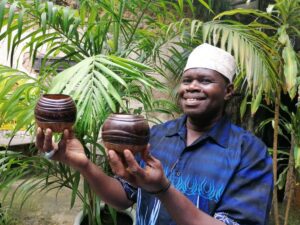 If you would like to order these bowls, you are welcome to contact Mohammed.
Contact/WhatsApp: +255 777 855 798
e-mail: [email protected]
Facebook @mohammedissa
Mohammed can be found in the Christmas Bazaar at the Secret Garden at Emerson Spice.
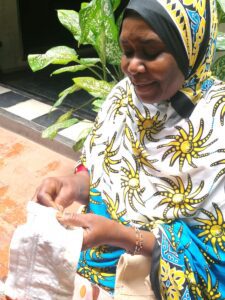 Mwanaussi lives at Kwa Hani in Zanzibar town, behind Kariakoo. She grew up in the countryside in Nyamanzi and it is here that her grandmother from Makunduchi taught her how to make kofia after school hours.
It takes up to 2 months to make one kofi, which she does in between all her household duties. Usually she makes the kofia to order, which fetches the best price. However, if she doesn’t have any orders, she will try the re-sellers in town, but the price is then often lower. During this Christmas Bazaar she will have her handmade kofia ready for sale at a fair price.
She explains that there’s a big difference between a handmade kofia and a kofia made in China, which are widely sold in Zanzibar. The Chinese kofias are made by machine and are of course cheaper. But it is widely known that the handmade ones are of a far better quality.
There is also a difference between those made by students and the kofia made by women who have a lot of experience; the design will be more intricate and therefore the price a bit higher too.
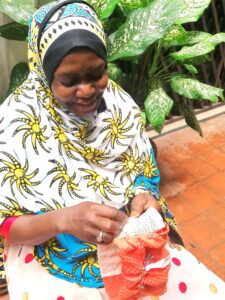 Mwanaussi has taught her young sister to make kofia and thinks it is important that the tradition lives on. She herself will continue to make the kofia.
If you would like to order these bowls, you are welcome to contact Mwanaussi on: +255 777 03 13 07
Mwanaussi can be found in the Christmas Bazaar – location tbc.
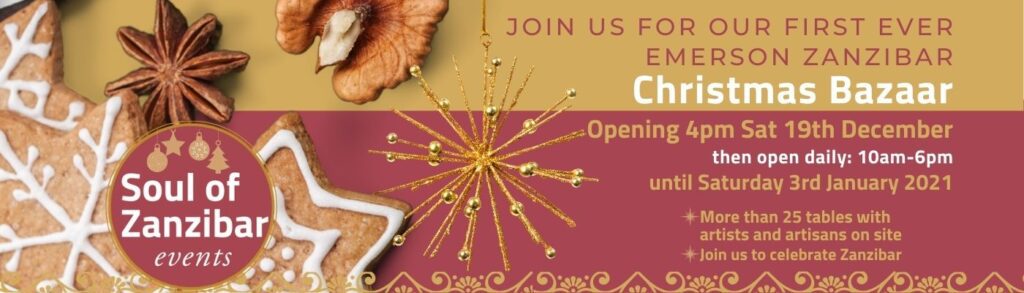
In the COUNTDOWN to the Christmas Bazaar we will be introducing more of the artisans and craftsmen & women who will be exhibiting.
Soon we will also tell you all about a fun daily competition that will be running throughout the Christmas Bazaar.
So please Follow and Like Us on Facebook and Instagram to find out more: